Port Royal, Jamaica, was once the beating heart of the Golden Age of Piracy – a city where fortune-seekers, privateers, and rogues gathered to make their mark on the Caribbean. Known as the “wickedest city on earth,” its bustling streets were filled with taverns, brothels, and gambling houses, embodying the chaotic allure of a world driven by plunder and profit. But Port Royal’s story is far more than one of vice and piracy. It is a tale of remarkable rise, devastating catastrophe, and ongoing efforts to preserve its legacy. Join me as we explore the history of this legendary pirate haven and its enduring place in history.
Rise
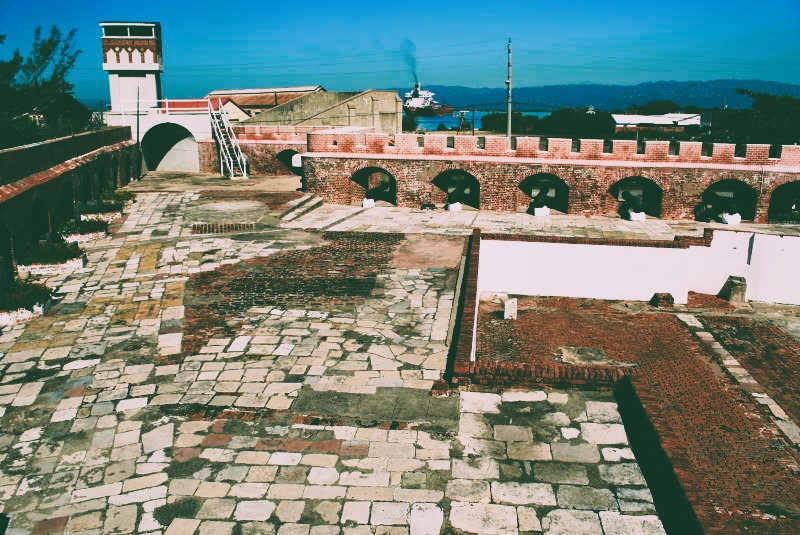
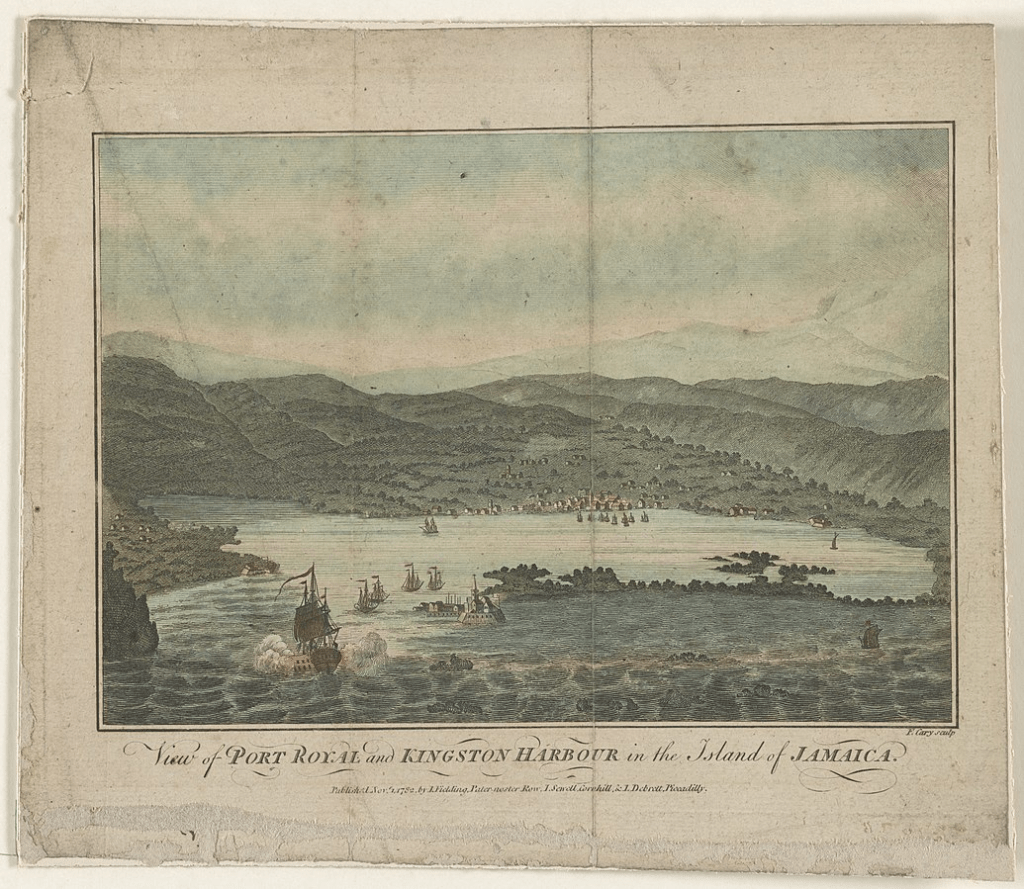
Before the English established their stronghold on Jamaica, the area known as Port Royal had a long history of strategic importance. Originally used by the Taino people for fishing, the location was first claimed by the Spanish in 1494 but largely neglected despite its strategic position within Caribbean trade routes. This changed dramatically in 1655 when an English expedition led by Admiral Penn and General Venables captured the island as a “consolation prize” following a failed attempt to take Hispaniola. They quickly recognised the location’s potential, constructing Fort Cromwell (later renamed Fort Charles) to control the harbour and safeguard the colony.
Port Royal began as a modest settlement around this fort, but its transformation into one of the most infamous cities in the New World came with the arrival of privateers. Under Governor Edward D’Oyley, the English lacked sufficient resources to defend their new possession. As a solution, D’Oyley invited the Brethren of the Coast – privateers and buccaneers – to use Port Royal as their home base. These privateers, armed with letters of marque, became a crucial line of defence against Spanish retaliation, while simultaneously enriching the port through attacks on Spanish shipping and settlements.
By the 1660s, Port Royal had become a bustling economic and social hub, infamous for its taverns, brothels, and debauchery. Nearly half of its 4,000 residents were involved in privateering, and the wealth generated from plundering Spanish towns and ships was immense. Figures like Henry Morgan, who led violent raids on Panama and Portobello, were emblematic of this era, bringing in vast treasures to be spent extravagantly in the city’s streets.
However, Port Royal’s rise wasn’t solely built on piracy. The city’s deep harbour, flat terrain, and protected position made it an ideal mercantile hub. Its economy rapidly diversified, with trade in slaves, sugar, and other commodities overshadowing even the profits of the sugar plantations. By the late 17th century, Port Royal had outpaced many other New World settlements in wealth and importance, earning its nickname as the “wickedest city on earth.” Its unique combination of strategic location, economic opportunity, and lawless allure made it both an asset to the English crown and a legendary destination for fortune-seekers.
Fall
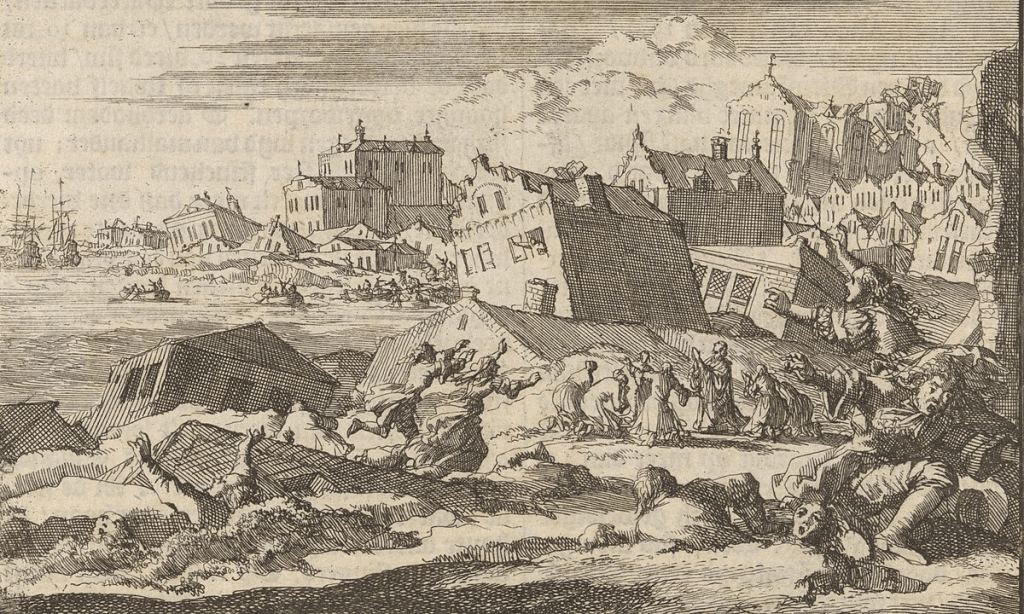
Once hailed as the “storehouse and treasury of the West Indies,” this hub of trade, piracy, and vice met its fate on the morning of 7 June 1692. Shortly before noon, a powerful earthquake struck with catastrophic force, forever altering the landscape of Jamaica and plunging 33 acres – two-thirds of the city – into Kingston Harbour.
The disaster was swift and merciless. At 11:43 a.m., as evidenced by the stopped hands of a pocket watch retrieved from the seabed centuries later, the sandy foundations of the city succumbed to a geological process known as liquefaction. Built atop 65 feet of water-saturated sand, Port Royal’s heavy, brick-built structures – an attempt to replicate English architectural styles – simply sank. Buildings slid or dropped into the harbour as the ground transformed into quicksand beneath them. Witnesses described scenes of utter chaos: streets vanishing into the sea, fortifications crumbling, and waves swallowing homes and lives alike. While Fort Charles remained standing, other fortresses, such as Fort James and Fort Carlisle, disappeared beneath the waves.
The human cost was staggering. In an instant, 2,000 lives were lost, and in the days that followed, another 3,000 perished from injuries, disease, and exposure. The tsunami that followed the quake compounded the devastation, scattering corpses and wreckage across the city and leaving survivors to grapple with famine, fever, and homelessness. Attempts to recover the dead were gruesome and largely futile, as bodies became trapped in the submerged ruins or drifted out to sea.
Efforts to rebuild Port Royal faltered under a relentless series of misfortunes. A fire in 1703 decimated much of what remained, followed by hurricanes, floods, and further earthquakes throughout the 18th century. By 1722, after enduring successive storms and a second devastating fire, Port Royal’s era as the Caribbean’s wealthiest and most infamous port was effectively over. Its demise marked not only the end of a city but also a turning point in Jamaica’s economic power, as plantations rose to dominance, leaving the once-bustling port to languish in history and legend.
Revival
Today, Port Royal offers an extraordinary window into 17th-century colonial life, thanks to ground-breaking archaeological efforts that have unearthed incredible treasures beneath the waves. Beginning in 1981, explorations led by Texas A&M University and the Jamaica National Heritage Trust have uncovered artifacts that reveal the city’s former vibrancy. Beneath the harbour, the oxygen-deprived environment has preserved relics ranging from Dutch Delftware to delicate Chinese porcelain, and even poignant remnants of the disaster, such as a child’s remains beneath a collapsed wall.
These excavations have not only illuminated the city’s layout but also provided powerful insights into the daily lives of its inhabitants – how they dined, traded, and lived amidst a world teetering between lawlessness and opulence. Silver cutlery and encrusted pewter plates evoke a sense of grandeur, while submerged streets, buildings, and shipwrecks serve as an unparalleled archaeological record, offering us a vivid snapshot of the past.
The town’s revitalization efforts are breathing new life into Port Royal, reimagining it as a global destination where history, heritage, and innovation meet. In 2020, a floating pier welcomed its first cruise ship, marking a significant milestone in the vision to transform Port Royal into a world-class cultural hub. Plans for museums, interactive exhibits, and the reconstruction of its historic harbour areas are already underway, each step taken with an eye toward showcasing the rich legacy of this legendary city. Although funding challenges remain, the momentum is undeniable.
Sustainability is at the core of these efforts, ensuring that the town’s revival honours both its past and its environment. The surrounding marine ecosystem, home to fragile coral reefs and endangered species, has been designated an environmentally sensitive zone, balancing the needs of conservation with tourism. Innovative proposals, such as underwater archaeological trails, promise to blend heritage with eco-friendly attractions, offering visitors an experience that connects them to the history of Port Royal in a way that is both engaging and respectful of its ecological significance.
Port Royal is more than just a place of historical interest – it is a living testament to the resilience of human ambition. Its submerged ruins, once a symbol of catastrophe, are now a beacon for historians, archaeologists, and dreamers alike. As efforts to revitalize the city continue to gain momentum, Port Royal stands poised to once again become a thriving hub, this time as a symbol of preservation, innovation, and sustainability. The city that once faced total destruction is now on the brink of becoming a vibrant, internationally recognized destination – a place where the past can be celebrated, studied, and shared for generations to come. With careful planning, Port Royal’s revival will ensure that its legacy endures, inspiring future generations to appreciate both its remarkable history and the ongoing journey toward revitalization.
Sources
Jamaica’s ‘wickedest city’ Port Royal banks on heritage – BBC News
Jamaica’s Port Royal: The wickedest city on Earth? – BBC Travel
Port Royal, Jamaica Project – Nautical Archaeology Program
Port Royal | Jamaica, Map, History, & Earthquake | Britannica
 Curious George