
Graham Hancock and his devoted following believe that before the Younger Dryas, an advanced urban and agricultural civilisation once spanned the globe. According to this theory, it was wiped out by a cataclysmic return to Ice Age conditions around 12,000 BCE, with its fragmented survivors seeding the early civilisations we recognise today. This claim attempts to explain uncanny similarities between distant ancient societies — from pyramids to mythologies — by tracing them back to a single lost source.
This short opinion piece won’t rehash the many detailed critiques of Hancock’s claim — that work’s already been brilliantly handled by archaeologists and educators like Flint Dibble, Professor Dave Explains, Miniminuteman, Stefan Milo, and others on YouTube (highly recommend checking them out). Instead, I want to ask a different question: even if Hancock’s narrative doesn’t hold up archaeologically, does it mean something? Why does it resonate with so many people — and does it have any place at all in the modern conversation about archaeology?
Firstly, regarding the claim itself — “disproven” is too generous. The reality is that Hancock’s civilisation was never provable to begin with. Archaeology is a science grounded in evidence, and Hancock’s theory is fundamentally unscientific. There is no credible data — no architecture, no artefacts, no texts — that support the existence of a global Ice Age civilisation. Even Hancock himself acknowledged this lack of evidence during his debate with archaeologist Flint Dibble on the Joe Rogan podcast. Without verifiable material remains, there is simply no reason to treat his claims as anything more than speculation. Until hard evidence emerges, his theory remains not just unproven, but unfounded.
The only line of argument that really keeps Hancock in debate with far more knowledgeable experts is this: “You haven’t looked everywhere.” He claims that because large parts of the world remain unexcavated, we can’t rule out the existence of his lost civilisation. In a technical sense, he’s right — we haven’t excavated the entire planet. But archaeology has surveyed and studied a great deal, across continents and landscapes. And if Hancock’s civilisation was as advanced and widespread as he suggests, we’d expect some evidence to have surfaced by now — architecture, tools, inscriptions, something. But there’s nothing. This argument is particularly frustrating because it allows Hancock to indefinitely dodge criticism. He can keep repeating the same claim for years: “Well, you still haven’t looked everywhere.” It creates a theory that is essentially impossible to disprove — which, ironically, also makes it scientifically useless. Because to leap from “it hasn’t been ruled out” to “therefore, it’s true” is not logic — it’s a fallacy. And in any serious field of inquiry, that kind of leap is not just mistaken. It’s absurd.
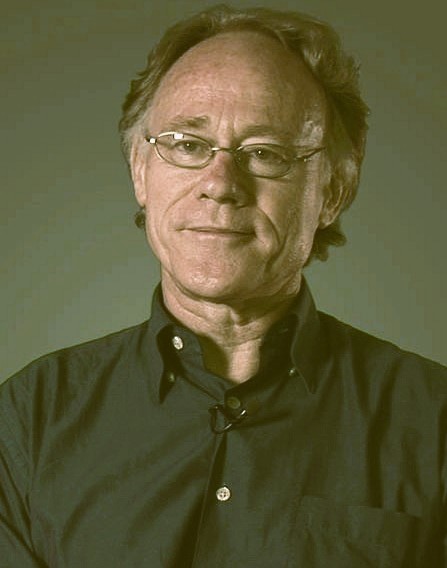
But why is Hancock so popular? Why do his books sell? Why do millions watch his show? Because people just love to challenge the known. And there’s something deeply human about that – questioning authority, suspecting that we’ve been lied to, that the truth is hidden just beneath the surface. This kind of scepticism — when it’s grounded in curiosity and a desire to understand — is healthy. It keeps institutions honest. It demands evidence. It fuels progress. Think of a public health debate: where citizens ask questions about a new vaccine — its ingredients, its risks, its benefits — that’s good. It’s necessary. A functional society depends on this kind of scrutiny.
But when people ignore qualified scientists and instead follow an unqualified voice online who tells them everything they want to hear, that’s where the problem begins. This is the breeding ground of misinformation. Of anti-intellectualism. It’s not just unhelpful — it’s dangerous. It’s a disease and its spreading. And in the case of pseudoarchaeology, it leads people to reject the work of thousands of scientists, researchers, Indigenous communities, and local experts — all of whom have spent their lives studying the past — in favour of a convenient, seductive story delivered by someone who looks like a rebel truth-teller. Hancock is tapping into something emotional. His theory offers secret knowledge, a lost origin story, a dramatic rewriting of everything we thought we knew. And when you feel disillusioned with the world — with politics, with inequality, with academia — his version of history feels more exciting, more meaningful, almost heroic. You’re not just learning history — you’re uncovering the truth they don’t want you to know. But that’s the trap. Because real archaeology isn’t built on secrets or saviours. It’s a science. It’s built on evidence, collaboration, nuance, and humility. And if we really want to understand the past, we need to stop looking for prophets — and start listening to the people doing the work.

So Hancock’s work is unscientific, and it fundamentally lacks any meaningful evidence. But what if we read it not as history, but as fiction? After all, the human past is still full of mysteries. There are vast gaps in our knowledge, and that uncertainty can invite speculation. In that sense, maybe Hancock’s theories shouldn’t be immediately dismissed as stories — because humans have always told stories to make sense of the unknown. That said, appreciating an idea is not the same as accepting it as fact. We can acknowledge the imaginative pull of Hancock’s lost civilisation while still recognising that none of it is backed by evidence. Could he one day be proven right? Maybe. But science doesn’t deal in maybes. It deals in what can be observed, tested, and verified. Until that happens, Hancock’s theory isn’t suppressed truth — it’s speculative fiction. And that’s fine. It can be entertaining. But it doesn’t belong in serious archaeology unless it meets the same evidentiary standards we expect from everyone else.
But now we reach the heart of my real issue with Hancock: his relentless attack on the field of archaeology. He’s free to propose his theories. But when he presents them as fact, and then lashes out at experts who challenge him, he crosses a line. These are people who’ve dedicated their lives to understanding the past through evidence, collaboration, and critical thinking. When Hancock is proven wrong — as he often is — he doesn’t adjust his theory. Instead, he attacks archaeology itself. He accuses archaeologists of orchestrating a cover-up. He claims they’re not doing enough to search for his lost civilisation. He casts doubt on their motives, their integrity, their entire profession — all while travelling the world on his own confirmation-biased quest for the truth he’s already decided exists.
The irony is staggering. He criticises scientists for doing careful, methodical work — while he chases a global myth with no credible evidence. It’s intellectual dishonesty. Archaeology is a rigorous and deeply respectful field. It has earned its place through decades of research, excavation, theory, and public education. And yet Hancock’s rhetoric actively turns people away from it. That, to me, is his greatest offence. Hancock gets the Netflix deals. He gets the bestsellers. Meanwhile, real history — messy, complex, evidence-based history — gets buried under spectacle.
So, how do we push back against Hancock — and against the growing grip of anti-intellectualism on archaeology? We start by choosing curiosity rooted in evidence. Read history books. Watch well-researched documentaries. Listen to podcasts made by experts who’ve spent years studying the past. Engage with facts — not fantasies. It’s fine to enjoy Hancock’s theories as stories. But recognise them for what they are: speculative fiction. Until hard evidence proves otherwise, that’s all they are. By elevating sensationalism over evidence, Hancock’s narratives not only mislead the public but also undermine trust in science, discourage future generations from pursuing genuine archaeological research, and overshadow the voices of Indigenous communities whose histories deserve respect and careful study. The past is already full of wonder. We don’t need to invent lost civilisations to be amazed by human history. The truth is madder than fiction. What we do need is to support those who are uncovering the real thing — slowly, carefully, honestly.
 Curious George